

Canon EOS Rebel T7 DSLR Camera|2 Lens Kit Review (2026): Is This Classic Starter Camera Still Worth It? full review, specifications, pros, cons, comparison and buying guide.
Canon EOS Rebel T7 DSLR Camera|2 Lens Kit Review (2026): Is This Classic Starter Camera Still Worth It?
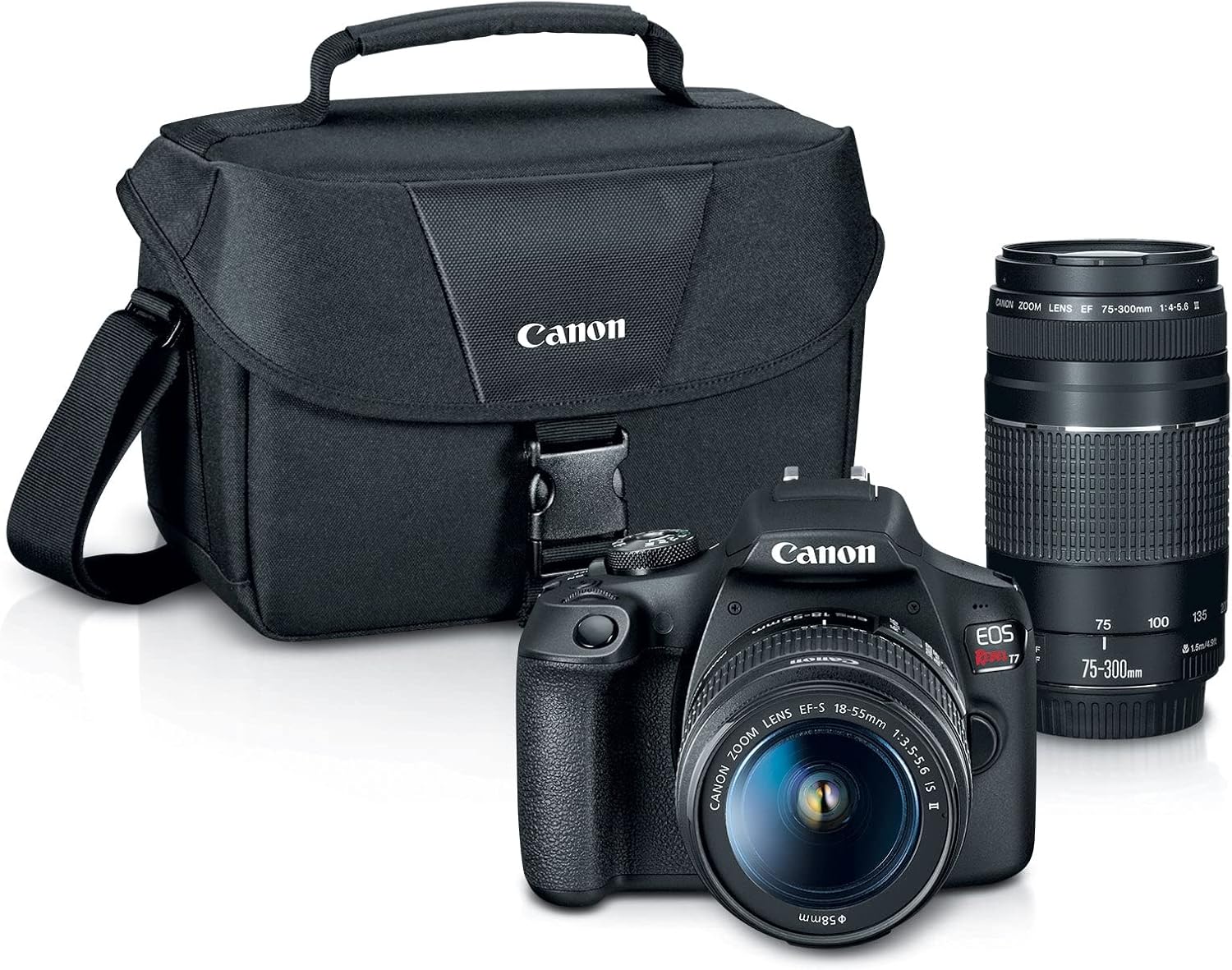
Canon EOS Rebel T7 DSLR Camera|2 Lens Kit Review (2026): Is This Classic Starter Camera Still Worth It?
Meta Description: Exploring the Canon EOS Rebel T7 DSLR Camera|2 Lens Kit in 2026. Discover if this affordable beginner setup still delivers value for photography enthusiasts with its EF18-55mm + EF 75-300mm lenses.
Keywords: Canon EOS Rebel T7 review, Rebel T7 2026, Canon T7 DSLR, beginner DSLR camera, best affordable camera, EF18-55mm lens, EF 75-300mm lens, DSLR camera kit, photography for beginners, Canon Rebel review, entry-level DSLR, camera buying guide, 2 lens kit review
In an era dominated by advanced mirrorless cameras and sophisticated smartphone photography, the Canon EOS Rebel T7 DSLR Camera with its two-lens kit (EF18-55mm + EF 75-300mm) presents an intriguing proposition for 2026. Originally released in 2018, this entry-level DSLR continues to be a popular choice for aspiring photographers in the USA seeking a dedicated camera without breaking the bank. Its traditional DSLR interface, optical viewfinder, and the versatility offered by the included dual lenses make it a compelling package for those transitioning from smartphone photography or looking for an affordable gateway into interchangeable lens systems.
While it may not boast the cutting-edge autofocus or 4K video capabilities of its newer mirrorless counterparts, the Rebel T7 excels in delivering solid still image quality, user-friendly operation, and a tactile shooting experience that many beginners appreciate. This comprehensive review dives deep into its performance, features, and real-world relevance in today's fast-evolving camera landscape, helping you determine if this seasoned veteran still holds its ground as a smart investment for your photographic journey in 2026.
Overview & Background
The Canon EOS Rebel T7 DSLR Camera, often marketed as the EOS 2000D outside the USA, made its debut in early 2018. Designed primarily for first-time DSLR users and photography enthusiasts on a budget, it quickly established itself as a go-to entry-level option. Fast forward to 2026, and the photography market looks significantly different. Mirrorless cameras have largely taken over the innovation spotlight, offering advanced autofocus, smaller form factors, and superior video capabilities. Yet, the Rebel T7 persists, often found bundled with a versatile two-lens kit, making it an attractive proposition for a specific segment of USA buyers.
In 2026, the T7's relevance lies in its affordability and its adherence to the classic DSLR experience. For many, the weight and feel of a traditional DSLR, coupled with an optical viewfinder, are still preferred over electronic viewfinders. Its accessible price point means aspiring photographers can invest in a dedicated camera system with interchangeable lenses without the significant financial commitment often associated with newer mirrorless systems. It serves as an excellent learning tool, allowing users to grasp fundamental photographic principles with manual controls, while also offering intelligent automatic modes for hassle-free shooting. The inclusion of an EF-S 18-55mm f/3.5-5.6 IS II standard zoom lens and an EF 75-300mm f/4-5.6 III telephoto zoom lens provides immediate versatility, covering everything from wide-angle landscapes and portraits to distant wildlife and sports, right out of the box.
Key Specifications
Understanding the core specifications of the Canon EOS Rebel T7 is crucial for assessing its capabilities in 2026. While some specs may seem dated compared to the latest flagships, they still offer robust performance for general photography.
| Feature | Details |
| Sensor | 24.1 Megapixel APS-C CMOS Sensor |
| Image Processor | DIGIC 4+ |
| ISO Sensitivity | 100-6400 (expandable to 12800) |
| Autofocus System | 9-point AF system (1 cross-type at center) |
| Video Recording | Full HD 1080p up to 30 fps |
| Continuous Shooting | Up to 3.0 fps |
| Viewfinder | Optical Pentamirror (approx. 95% coverage) |
| LCD Screen | 3.0-inch, 920k-dot fixed LCD monitor |
| Connectivity | Built-in Wi-Fi and NFC |
| Lens Mount | Canon EF/EF-S |
| Included Lenses | EF-S 18-55mm f/3.5-5.6 IS II, EF 75-300mm f/4-5.6 III |
| Dimensions (Body) | 129.0 x 101.3 x 77.6 mm (5.08 x 3.99 x 3.06 inches) |
| Weight (Body) | Approx. 475g (1.05 lb) including battery and card |
| Battery Life | Approx. 500 shots (CIPA standard) |
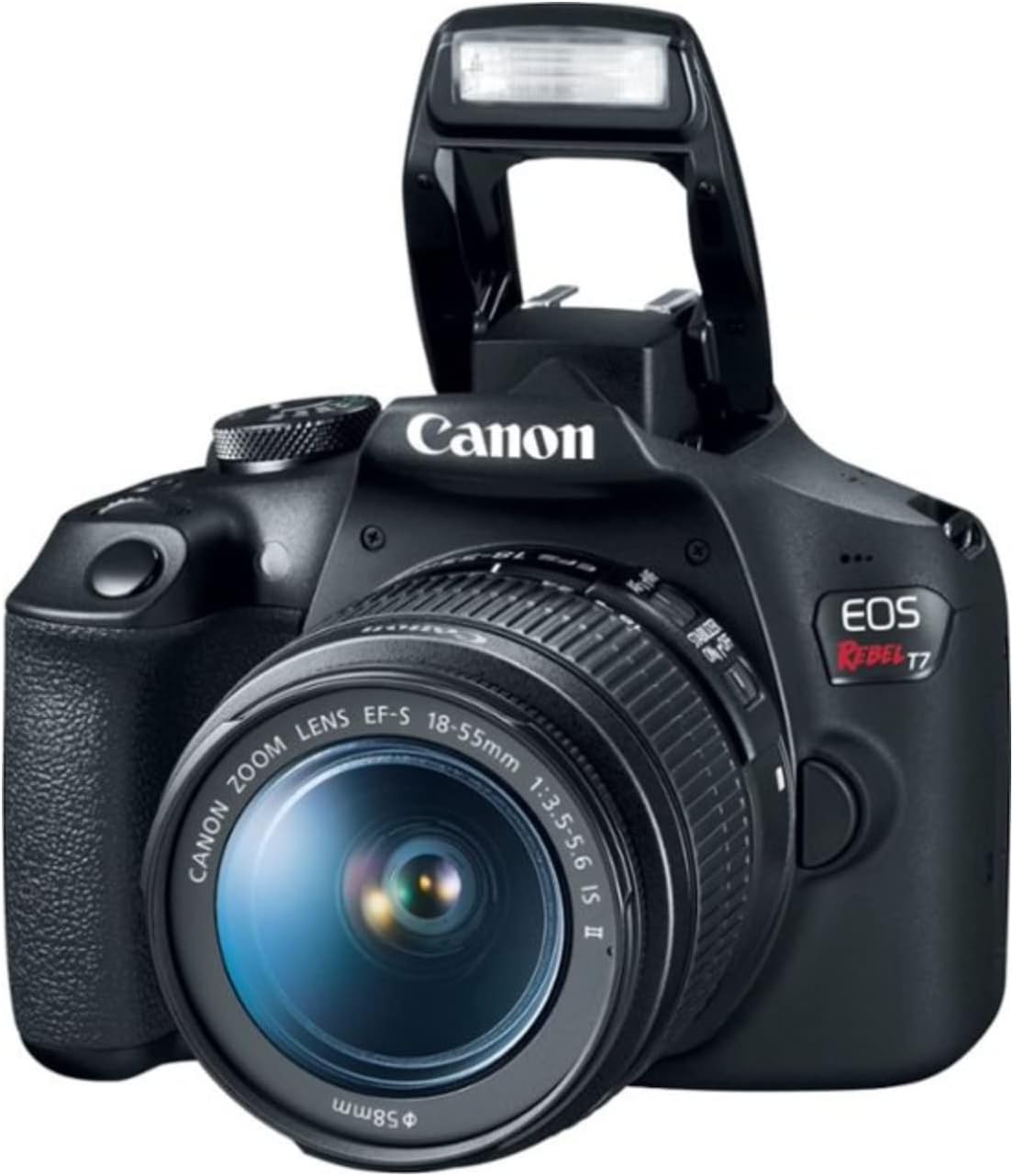
In-Depth Features Analysis
Delving deeper into the Canon Rebel T7's features reveals why it remains a pertinent option for entry-level photographers, even by 2026 standards. The camera's strength lies in its simplicity and foundational photographic capabilities.
While the T7's DIGIC 4+ processor is older, it's highly optimized for the 24.1MP sensor, ensuring decent image quality and responsive operation for its class. Don't underestimate the power of a good sensor, even with an older processor, especially when paired with quality glass. However, be mindful that post-processing large batches of RAW files might be slower compared to cameras with newer, faster processors.
Supporting Features
- 24.1 Megapixel APS-C CMOS Sensor: This sensor size and resolution are a significant upgrade from smartphone cameras, allowing for detailed images, good dynamic range, and the ability to crop photos without losing too much quality. For printing up to large sizes, this resolution is more than adequate. It performs well in good lighting conditions, producing vibrant and sharp stills.
- DIGIC 4+ Image Processor: While not Canon's latest, the DIGIC 4+ processor efficiently handles image data, allowing for reasonable burst shooting and fast image processing. It contributes to the camera's overall responsiveness and helps manage noise at higher ISO settings, though not to the same extent as newer processors.
- Full HD 1080p Video Recording: The T7 can record video at 1080p up to 30 frames per second. While it lacks 4K capabilities common in newer cameras, Full HD is still perfectly suitable for everyday video clips, vlogging, and family events. The video quality is solid for a camera in its price range, though the autofocus during video recording can be slow and noisy.
- Built-in Wi-Fi and NFC Connectivity: This feature allows for easy sharing of photos to smartphones or tablets and remote control of the camera via the Canon Camera Connect app. For budding photographers who want to share their work instantly on social media, this wireless connectivity is incredibly convenient and a must-have in 2026.
- Optical Viewfinder: A defining feature of DSLRs, the optical viewfinder provides a direct, lag-free view of your scene. Unlike electronic viewfinders, it doesn't consume battery power and performs excellently in low light, offering a clear, bright view. It’s a traditional shooting experience that many purists and beginners appreciate for learning composition without digital distractions.
- Guided Feature Assistant: Canon's intuitive menu system includes a Feature Assistant that explains camera settings and modes in simple language. This is immensely helpful for beginners learning the ropes of aperture, shutter speed, ISO, and various scene modes, accelerating their understanding of photography fundamentals.
- Included EF-S 18-55mm IS II Lens: This standard zoom lens is a versatile workhorse, perfect for everyday shooting, from wide-angle landscapes to portraits. The "IS II" indicates it has image stabilization, which is crucial for sharp handheld shots, especially in lower light.
- Included EF 75-300mm III Lens: This telephoto zoom lens extends your reach significantly, allowing you to capture distant subjects like wildlife, sports, or compressed landscapes. While it lacks image stabilization (which is a drawback for a telephoto), it provides an affordable way to explore long-range photography, making the kit extremely comprehensive for a beginner.
Performance & User Experience
When evaluating the Canon EOS Rebel T7 in 2026, it's essential to set realistic expectations. This is an entry-level DSLR from several years ago, and its performance reflects that. However, within its category and price point, it delivers a commendable user experience.
Image Quality: The 24.1MP APS-C sensor produces excellent still images, especially in good lighting conditions. Colors are vibrant and accurate, a hallmark of Canon cameras. Detail rendition is strong, allowing for good flexibility in post-processing. Noise performance is respectable up to ISO 1600-3200; beyond that, noise becomes more apparent, though still manageable with careful post-processing for online sharing. For casual photographers and those looking to print modest sizes, the image quality is more than sufficient.
Autofocus: The 9-point autofocus system, with its single cross-type sensor at the center, is competent for static subjects in decent light. It's reasonably quick and accurate for portraits, landscapes, and everyday snapshots. However, it struggles with fast-moving subjects, especially in low light, where hunting can occur. Compared to the advanced phase-detection and AI-driven autofocus systems of modern mirrorless cameras, the T7's AF is a definite step behind. Live View autofocus is contrast-detection based and noticeably slower, making it less ideal for action shots or video.
Speed & Responsiveness: The 3 frames per second (fps) continuous shooting speed is adequate for capturing a sequence of events but won't keep up with serious sports or wildlife photography. Startup time is quick, and navigating the menus is generally smooth thanks to the DIGIC 4+ processor. Shutter lag is minimal, providing a responsive shooting feel.
Video Performance: As mentioned, 1080p 30fps video is available. The quality is good for casual use, but the lack of 4K, external headphone/mic jacks, and slow autofocus in video mode means it's not a videographer's first choice. Rolling shutter can also be an issue with rapid panning movements.
Battery Life: The Rebel T7 offers a CIPA-rated battery life of approximately 500 shots per charge. This is a decent figure for a DSLR and generally better than many mirrorless cameras, allowing for extended shooting sessions without constant worry about recharging. Real-world usage can vary, often exceeding this if you primarily use the optical viewfinder.
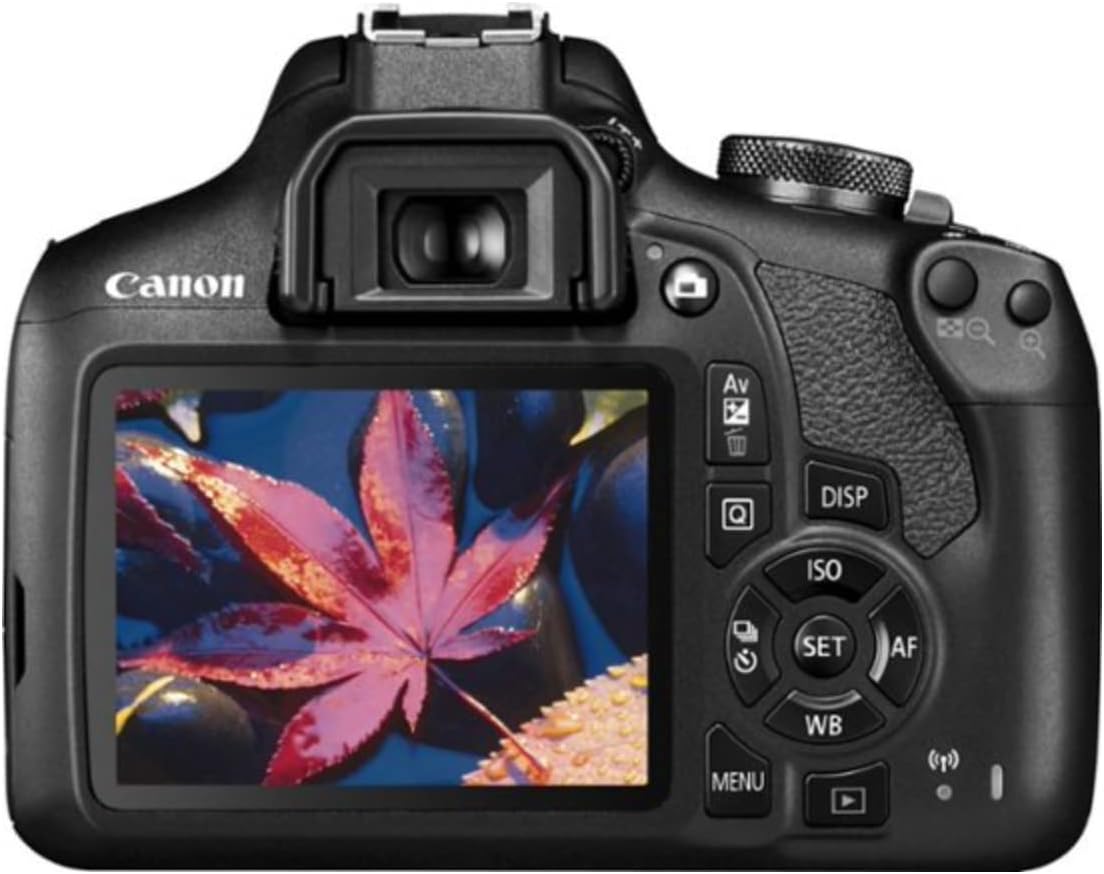
Ergonomics & Handling: The T7 features a classic DSLR form factor, which provides a substantial grip that feels secure in hand. The button layout is intuitive, making it easy for beginners to adjust settings quickly. The fixed 3.0-inch LCD screen is bright and clear for reviewing images, though the lack of touch functionality or articulation (tilt/swivel) can be a limitation for shooting from awkward angles or for vlogging.
User Feedback Summary: Users consistently praise the T7 for its ease of use, robust build, and excellent image quality for its price. Many beginners find the optical viewfinder and tactile controls very satisfying. Common criticisms revolve around the outdated autofocus system, lack of 4K video, and the fixed LCD screen. However, for those who prioritize still photography and are on a strict budget, these trade-offs are often deemed acceptable.
Comparison with Top Alternatives
In 2026, the Canon EOS Rebel T7 faces competition not only from other entry-level DSLRs but increasingly from advanced mirrorless cameras that now occupy similar price points. Here's how it stacks up against some relevant alternatives:
| Feature | Canon EOS Rebel T7 DSLR Camera|2 Lens Kit with EF18-55mm + EF 75-300mm Lens, Black | Nikon D3500 (2 Lens Kit) | Canon EOS R100 (RF-S 18-45mm Kit) | Sony Alpha a6100 (16-50mm Kit) |
|---|---|---|---|---|
| Camera Type | DSLR | DSLR | Mirrorless | Mirrorless |
| Sensor | 24.1MP APS-C CMOS | 24.2MP APS-C CMOS | 24.2MP APS-C CMOS | 24.2MP APS-C CMOS |
| Image Processor | DIGIC 4+ | EXPEED 4 | DIGIC X | BIONZ X |
| ISO Range | 100-6400 (exp. 12800) | 100-25600 | 100-12800 (exp. 25600) | 100-32000 (exp. 51200) |
| Autofocus | 9-point AF (1 cross-type) | 11-point AF (1 cross-type) | Dual Pixel CMOS AF II (3,975 points) | 425-point Fast Hybrid AF |
| Video | 1080p @ 30fps | 1080p @ 60fps | 4K @ 24/25fps (cropped), 1080p @ 60fps | 4K @ 30fps, 1080p @ 120fps |
| Continuous Shooting | 3.0 fps | 5.0 fps | 6.5 fps (mechanical), 3.5 fps (electronic with AF) | 11.0 fps |
| Viewfinder | Optical Pentamirror | Optical Pentamirror | 0.39" EVF (2.36M dots) | 0.39" EVF (1.44M dots) |
| LCD Screen | 3.0" Fixed (920k dots) | 3.0" Fixed (921k dots) | 3.0" Fixed (1.04M dots) | 3.0" Tilting Touchscreen (921k dots) |
| Connectivity | Wi-Fi, NFC | Bluetooth | Wi-Fi, Bluetooth | Wi-Fi, Bluetooth |
| Included Lenses (Kit) | EF-S 18-55mm IS II + EF 75-300mm III | AF-P DX 18-55mm VR + AF-P DX 70-300mm VR | RF-S 18-45mm F4.5-6.3 IS STM | E PZ 16-50mm F3.5-5.6 OSS |
| Typical Price Range (Kit, 2026) | $450 - $550 | $500 - $600 | $650 - $750 | $700 - $850 |
Analysis:
- Nikon D3500: A direct DSLR competitor, the D3500 often comes with better bundled lenses (AF-P series with VR) and offers slightly better autofocus and burst rate, along with superior battery life. It's also a very lightweight and compact DSLR. For traditional DSLR enthusiasts, it's a strong alternative.
- Canon EOS R100: Represents Canon's entry into mirrorless. While still very basic (fixed screen, basic EVF), it benefits from Canon's Dual Pixel AF II for much faster and more accurate autofocus, especially for tracking. It also offers 4K video (with a crop) and access to the newer RF lens mount, which has more advanced glass. It's a stepping stone into the mirrorless world but often comes with only one basic lens.
- Sony Alpha a6100: Though slightly older in the mirrorless space, the a6100 offers significantly better performance than the T7, especially in autofocus (Sony's Real-time Tracking AF is phenomenal) and continuous shooting speed. It has 4K video, a tilting touchscreen, and a more robust ecosystem of E-mount lenses. Its main drawback compared to the T7 kit is typically coming with only one lens, meaning less telephoto reach out of the box unless you buy additional glass.
The T7's primary advantage in 2026 is its unbeatable price point for a dual-lens kit, offering significant versatility for a very low entry cost. The other options offer more modern tech, particularly in AF and video, but at a higher price or with fewer lenses included.
Pros & Cons
Pros
- Excellent Value & Price: One of the most affordable interchangeable lens camera kits available, making DSLR photography accessible to everyone.
- Good Image Quality for Stills: The 24.1MP APS-C sensor produces sharp, vibrant images in good lighting, ideal for prints and online sharing.
- User-Friendly Interface: Canon's intuitive menu system and Feature Guide make it easy for beginners to learn and master photography.
- Versatile Dual Lens Kit: The included 18-55mm and 75-300mm lenses cover a broad range of focal lengths, offering immediate flexibility for various shooting scenarios.
- Optical Viewfinder: Provides a clear, lag-free view, conserves battery, and offers a traditional, immersive shooting experience.
- Solid Battery Life: DSLRs generally offer better battery endurance than mirrorless cameras, and the T7 is no exception, providing ample shots per charge.
- Extensive EF/EF-S Lens Compatibility: Access to Canon's vast legacy of EF and EF-S lenses, allowing for future upgrades without changing camera systems (though new RF lenses are not natively compatible).
Cons
- Outdated Autofocus System: The 9-point AF is slow and struggles with moving subjects, especially in low light. Live View AF is even slower.
- No 4K Video Recording: Limited to Full HD 1080p at 30fps, lacking the resolution and advanced video features of modern cameras.
- Fixed LCD Screen: The 3.0-inch screen is non-articulating and lacks touch functionality, limiting creative angles and ease of operation.
- Limited Low-Light Performance: While decent for its class, the T7's high ISO performance can't match newer sensors and processors, leading to more noise at higher sensitivities.
- Slower Burst Rate: At 3.0 fps, it's not suitable for fast-action sports or rapidly unfolding events.
- Bulky and Heavier than Mirrorless: As a traditional DSLR, it's larger and heavier than most entry-level mirrorless cameras, which might be a consideration for portability.
- No In-Body Image Stabilization (IBIS): Relies solely on lens-based stabilization (IS), meaning non-IS lenses will lack stabilization.
Real-World Impact
For USA consumers in 2026, the Canon EOS Rebel T7|2 Lens Kit has a distinct real-world impact, particularly for those entering the world of serious photography. It democratizes photography by offering a robust, feature-rich camera system at an exceptionally competitive price. Instead of being limited to a single prime lens or a basic zoom, users immediately gain the flexibility of both a standard and a telephoto lens, opening up diverse photographic opportunities from day one.
This camera empowers beginners to move beyond the limitations of smartphone cameras. It provides the tactile controls necessary to truly understand aperture, shutter speed, and ISO – the building blocks of photography – in a way that touchscreens cannot replicate. For families, hobbyists, or students, it means capturing sharper, more detailed memories of vacations, school events, or local sports. The included lenses are perfect for documenting everything from wide-angle group shots and environmental portraits to distant wildlife in national parks or athletes on the field.
Furthermore, the T7 serves as an excellent educational tool. Its guided menus and straightforward operation reduce the initial learning curve, allowing new photographers to gain confidence quickly. The Wi-Fi and NFC connectivity bridge the gap between dedicated camera quality and instant social sharing, ensuring that high-quality images can still be easily disseminated. While it won't be the choice for professional video production or cutting-edge action photography, its real-world impact is in fostering a love for photography, providing a solid foundation, and offering immense creative potential for its target audience.
Practical Tips & Advice
- Master the Exposure Triangle: The Rebel T7 is an excellent camera for learning manual mode. Practice adjusting aperture, shutter speed, and ISO to understand how they interact and affect your final image. Start in Aperture Priority (Av) or Shutter Priority (Tv) mode to grasp one setting at a time.
- Invest in Good Glass (Eventually): While the kit lenses are versatile, consider upgrading to a faster prime lens (e.g., Canon EF 50mm f/1.8 STM) for better low-light performance and beautiful background blur (bokeh) for portraits. It's often the best upgrade for image quality on an entry-level body.
- Shoot in RAW: Even as a beginner, shooting in RAW format provides maximum flexibility for post-processing. It allows you to correct exposure, white balance, and retrieve detail in shadows and highlights much more effectively than with JPEG files.
- Utilize the Optical Viewfinder: For still photography, especially in bright light, the optical viewfinder is superior for composition and battery efficiency. Rely on it more than Live View for a more traditional and stable shooting experience.
- Carry an Extra Battery: While battery life is decent, having a spare battery is always a good idea, especially for long shooting days or when traveling.
- Learn Basic Flash Photography: The built-in pop-up flash is useful in a pinch, but consider an external speedlite for more flattering light. Even a basic, affordable external flash can dramatically improve your indoor portrait photography.
- Protect Your Gear: Invest in a good camera bag, lens caps, and a UV filter for your lenses to protect them from dust, scratches, and minor impacts. Regular cleaning of your lenses and sensor (if comfortable, otherwise professional cleaning) is essential.
- Explore Your Lenses: The 18-55mm is great for everyday and wide shots, while the 75-300mm opens up telephoto possibilities. Don't be afraid to experiment with both to understand their unique perspectives and uses.
Frequently Asked Questions
Is the Canon EOS Rebel T7 still a good camera to buy in 2026?
Yes, for specific users. The Canon EOS Rebel T7 remains an excellent entry-level DSLR for beginners, students, or anyone on a tight budget in 2026. Its main draw is the combination of solid image quality, user-friendly controls, and a versatile two-lens kit at an exceptionally affordable price. While it lacks the advanced features of newer mirrorless cameras (like 4K video or cutting-edge autofocus), it offers a fantastic platform for learning photography fundamentals without a significant financial outlay.
What kind of photography is the Rebel T7 best for?
The Rebel T7 is best suited for general photography, including landscapes, portraits, family events, travel photography, and casual street photography. With the included 75-300mm telephoto lens, it can also handle beginner-level wildlife and sports photography where subjects are not moving extremely fast. Its strengths lie in still image capture in well-lit conditions.
Can I use other lenses with the Canon Rebel T7?
Absolutely! The Canon Rebel T7 uses the Canon EF/EF-S lens mount, meaning it is compatible with a vast array of Canon lenses, both new and old. This includes EF-S lenses (designed specifically for APS-C crop sensor cameras) and full-frame EF lenses. This extensive lens ecosystem provides immense flexibility for upgrading and expanding your photographic capabilities as you grow.
Does the Canon Rebel T7 have image stabilization?
The Canon Rebel T7 camera body itself does not have in-body image stabilization (IBIS). However, the included EF-S 18-55mm IS II kit lens DOES have optical image stabilization built into the lens (indicated by "IS"). This helps reduce blur from camera shake when shooting handheld. The EF 75-300mm III lens does NOT have image stabilization, so you'll need to use faster shutter speeds or a tripod to avoid blur with that lens.
How does the Rebel T7 compare to my smartphone camera?
The Rebel T7 offers significantly superior image quality compared to most smartphone cameras, especially in terms of detail, dynamic range, and low-light performance (despite its age). Its larger APS-C sensor and the ability to use dedicated lenses provide greater creative control over depth of field (background blur) and optical zoom. While smartphones excel in convenience and computational photography, the T7 offers a true photographic experience with manual controls and the ability to capture higher-quality raw files for professional editing.
Conclusion
In the dynamic landscape of 2026 photography, the Canon EOS Rebel T7 DSLR Camera|2 Lens Kit stands out as a testament to enduring value. While it may not pack the bleeding-edge technology of newer mirrorless systems, its core strengths — a capable 24.1MP APS-C sensor, user-friendly ergonomics, and an incredibly versatile dual-lens bundle — make it an outstanding entry point into serious photography. For aspiring photographers in the USA who are ready to graduate from smartphone cameras but are mindful of their budget, the T7 offers a rich, tactile learning experience and the creative freedom of an interchangeable lens system at an unbeatable price.
It’s important to acknowledge its limitations: the autofocus is slower, video capabilities are basic, and the screen is fixed. However, these are acceptable compromises for its intended audience. We confidently recommend the Canon EOS Rebel T7 with its 2-lens kit for beginners, students, or anyone seeking a cost-effective yet powerful tool to explore their photographic passion in 2026. It's not just a camera; it's an investment in learning and creating beautiful images without breaking the bank.
More Helpful Reads
Readers researching this product also found these expert reviews helpful:
Related Posts
Explore more helpful articles.
Post a Comment