

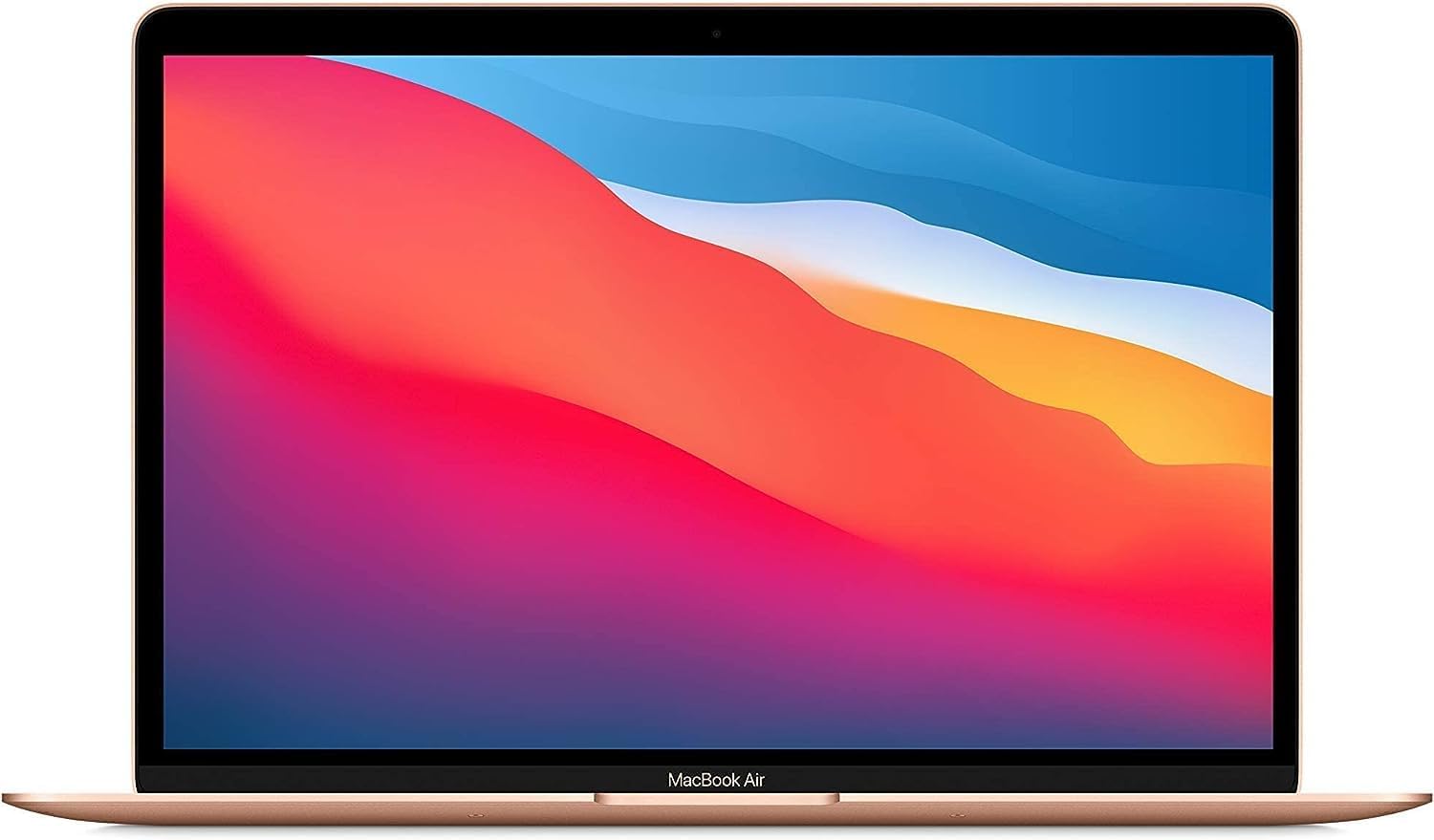
Late 2020 Apple MacBook Air with Apple M1 Chip (13.3 inch, 8GB RAM, 128GB SSD) Space Gray (Renewed) Review – Is This M1 MacBook Still Worth It in 2026? full review, specifications, pros, cons, comparison and buying guide.
Late 2020 Apple MacBook Air with Apple M1 Chip (13.3 inch, 8GB RAM, 128GB SSD) Space Gray (Renewed) Review – Is This M1 MacBook Still Worth It in 2026?

Late 2020 Apple MacBook Air with Apple M1 Chip (13.3 inch, 8GB RAM, 128GB SSD) Space Gray (Renewed) Review – Is This M1 MacBook Still Worth It in 2026?
Meta Description: Dive into our 2026 review of the Late 2020 Apple MacBook Air M1 (Renewed). Discover if its 8GB RAM and 128GB SSD still offer unbeatable value and performance for students and pros.
Keywords: Late 2020 Apple MacBook Air M1 Review, Renewed MacBook Air 2026, M1 MacBook Air 8GB 128GB SSD, Space Gray M1 MacBook, Apple M1 Chip performance, MacBook Air value 2026, Best renewed laptops, Student MacBook Air, Professional MacBook Air, Is M1 MacBook Air still good, MacBook Air 13.3 inch, entry-level MacBook Air, M1 chip longevity
In the rapidly evolving tech landscape of 2026, a 2020 laptop might seem like an anachronism. However, the Late 2020 Apple MacBook Air with its groundbreaking M1 chip continues to defy expectations, particularly when acquired as a renewed unit. This review delves into whether this specific configuration – 8GB RAM and a 128GB SSD – still holds up for the modern user, especially considering its renewed status offers significant cost savings.
While the M1 chip's raw power and efficiency remain impressive, the more constrained 128GB storage and 8GB unified memory present a nuanced proposition. For general productivity, web browsing, streaming, and light creative tasks, this MacBook Air often outperforms many newer Windows machines in its renewed price bracket. Its silent, fanless design, exceptional battery life, and seamless macOS integration continue to be major draws, making it a compelling option for students, remote workers, and casual users prioritizing value and Apple's ecosystem. The primary consideration for potential buyers in 2026 will be managing the limited internal storage effectively.
Overview & Background
The Late 2020 Apple MacBook Air, powered by the revolutionary M1 chip, marked a pivotal moment in the laptop industry. It was the first Mac to feature Apple's custom-designed ARM-based silicon, promising unprecedented performance-per-watt and a seamless integration between hardware and software. Fast forward to 2026, and this model, particularly as a renewed offering, continues to be a hot topic for USA tech buyers. Its relevance isn't just a testament to Apple's engineering; it's a reflection of the M1 chip's enduring capabilities that still impress years after its debut. For the USA market, where premium tech often comes with a premium price tag, renewed Apple products offer an accessible entry point into the ecosystem. This specific configuration – the 13.3-inch MacBook Air with 8GB RAM and a 128GB SSD in Space Gray – represents the entry-level M1 Air. While its specifications might appear modest on paper in 2026, especially the storage, the M1 chip's efficiency allows it to punch well above its weight. It remains a powerful contender for students, remote professionals, and casual users who need a reliable, high-performance laptop for daily tasks without breaking the bank. The question isn't if it's capable, but rather if its particular limitations—namely the 128GB SSD—are manageable for contemporary usage patterns, especially when considering the significant savings a renewed unit provides compared to a brand-new M3 MacBook Air. Its continued support for the latest macOS versions also ensures a modern software experience, making it a surprisingly relevant device even six years post-launch.Key Specifications
Understanding the core specifications of the Late 2020 Apple MacBook Air with the M1 chip is crucial for evaluating its performance in 2026. Despite its age, its foundational components were ahead of their time, contributing to its continued relevance.| Component | Details |
| Processor | Apple M1 chip (8-core CPU with 4 performance cores and 4 efficiency cores) |
| Graphics | 7-core integrated GPU |
| Neural Engine | 16-core Apple Neural Engine |
| RAM | 8GB unified memory |
| Storage | 128GB SSD (configurable to 256GB, 512GB, 1TB, 2TB at original purchase) |
| Display | 13.3-inch (diagonal) LED-backlit display with IPS technology; 2560x1600 native resolution at 227 pixels per inch with support for millions of colors (Retina display), True Tone technology, Wide color (P3) |
| Ports | 2x Thunderbolt / USB 4 ports with support for: Charging, DisplayPort, Thunderbolt 3 (up to 40Gb/s), USB 4 (up to 40Gb/s), USB 3.1 Gen 2 (up to 10Gb/s) |
| Wireless | Wi-Fi 6 (802.11ax), Bluetooth 5.0 |
| Camera | 720p FaceTime HD camera |
| Audio | Stereo speakers with wide stereo sound, 3.5 mm headphone jack |
| Battery | 49.9-watt-hour lithium-polymer battery (up to 15 hours wireless web, up to 18 hours Apple TV app movie playback) |
| Power Adapter | 30W USB-C Power Adapter |
| Dimensions | 0.16–0.63 inch (0.41–1.61 cm) H x 11.97 inches (30.41 cm) W x 8.36 inches (21.24 cm) D |
| Weight | 2.8 pounds (1.29 kg) |
| Operating System | Originally macOS Big Sur, upgradable to the latest macOS (e.g., macOS Sequoia or later in 2026) |
| Color | Space Gray |

In-Depth Features Analysis
The enduring appeal of the M1 MacBook Air isn't just about its initial wow factor; it's about how its core features continue to deliver a premium experience even years later. For a renewed model in 2026, understanding these features helps contextualize its value.Supporting Features
- Apple M1 Chip Architecture: Unparalleled Efficiency & Power The M1 chip, a System on a Chip (SoC), integrates the CPU, GPU, Neural Engine, I/O, and more onto a single die. This unified memory architecture drastically reduces latency and boosts efficiency. In 2026, its 8-core CPU (4 performance, 4 efficiency) still handles everyday tasks with remarkable speed and fluidity. Apps launch instantly, multitasking is smooth (within the 8GB RAM limits), and even computationally intensive tasks like light video editing or complex spreadsheet calculations are managed competently. The fanless design means this power is delivered in absolute silence, a significant advantage for quiet workspaces or libraries.
- Stunning Retina Display with True Tone The 13.3-inch Retina display, boasting a 2560x1600 resolution, offers crisp text and vibrant colors. Even in 2026, it holds its own against many newer panels, providing an immersive viewing experience for everything from documents to 4K video. True Tone technology automatically adjusts the display's color temperature to match ambient light, reducing eye strain and making on-screen content appear more natural and paper-like. While it lacks the extreme brightness or ProMotion (120Hz) of newer Apple displays, its quality is more than adequate for most users.
- Robust Fanless Design: Silent Operation One of the M1 MacBook Air's standout features is its fanless design. The M1 chip's efficiency allows it to dissipate heat passively, meaning the laptop operates in complete silence. This is a massive boon for anyone sensitive to fan noise, and it ensures consistent quiet performance during tasks like writing, browsing, or video calls. While sustained, heavy workloads might lead to thermal throttling compared to the actively cooled M1 MacBook Pro, for the typical user and the tasks this configuration is suited for, the silent operation is a distinct advantage.
- Magic Keyboard & Force Touch Trackpad: Industry-Leading Input The Magic Keyboard introduced with this generation offered a significant improvement over previous butterfly mechanisms, providing a comfortable and reliable typing experience. Keys have a satisfying travel and responsiveness. Coupled with the expansive Force Touch trackpad, which offers precise cursor control and multi-touch gestures, the input experience on the M1 Air remains among the best in the laptop market. These elements contribute significantly to daily productivity and user satisfaction.
- macOS Ecosystem & Longevity The M1 MacBook Air shipped with macOS Big Sur and continues to receive the latest software updates, ensuring access to cutting-edge features, security patches, and app compatibility. In 2026, it will likely still be supported for several more major macOS versions, providing long-term value. The tight integration between hardware and software, a hallmark of Apple products, delivers a smooth, intuitive, and secure user experience, further extending the device's lifespan and utility.
- Renewed Aspect: Quality and Value A "renewed" product means it has been professionally inspected, tested, and cleaned to work and look like new or near-new. Reputable renewed sellers offer warranties, mitigating much of the risk associated with used electronics. For the M1 MacBook Air, this means you get a nearly identical experience to a new unit from 2020, but at a significantly reduced price point, making its premium features accessible to a wider audience. It's an excellent way to acquire Apple's powerful M1 technology on a budget.
Performance & User Experience
Evaluating the Late 2020 M1 MacBook Air's performance in 2026 requires a realistic understanding of its specifications, particularly the 8GB RAM and 128GB SSD. While newer chips like M2 and M3 have pushed boundaries, the M1 remains a highly capable performer for its price point, especially in its renewed form. For daily usage, the M1 MacBook Air excels. Web browsing with multiple tabs, managing emails, working with office suites like Microsoft 365 or Apple Pages/Numbers/Keynote, and streaming high-definition video are handled effortlessly. The M1 chip's unified memory architecture efficiently manages the 8GB RAM, making it feel more responsive than 8GB in many Windows machines. However, heavy multitasking, such as running a demanding video editor, a virtual machine, and dozens of browser tabs simultaneously, will push the limits of the 8GB RAM, leading to increased memory swap to the SSD. This can slow down performance and contribute to SSD wear over time. The 128GB SSD is the most significant bottleneck. macOS and essential applications will consume a substantial portion, leaving very little room for user files, photos, or videos. While the SSD itself is incredibly fast (reading speeds around 2.5 GB/s), its capacity severely restricts its utility for users with large media libraries or numerous applications. Performance will degrade if the SSD is consistently near full capacity. In terms of benchmarks, the M1 chip consistently delivered single-core scores competitive with high-end Intel chips from later generations and multi-core scores that still hold up remarkably well. For instance, in Geekbench 6 (in 2026), you can expect single-core scores around 2200-2400 and multi-core scores around 8000-8500. While M2 and M3 chips offer incremental gains, the M1's performance is still robust for most consumer and light professional tasks. User feedback on renewed M1 MacBook Airs generally praises the incredible battery life, often achieving 10-15 hours on a single charge for typical workloads, even after a few years of use. The silent operation and premium build quality also receive consistent acclaim. However, the 128GB SSD is frequently cited as a significant limitation, often necessitating external storage solutions or reliance on cloud services. For students, this setup can be ideal for note-taking, research, and coursework. For professionals, it's excellent for administrative tasks, communication, and light coding, provided large data sets are not stored locally. Overall, the M1 MacBook Air in this configuration delivers a premium user experience characterized by speed, efficiency, and quiet operation for the vast majority of everyday computing tasks in 2026. Its limitations are almost entirely tied to its storage capacity, rather than raw processing power.Comparison with Top Alternatives
When considering a renewed Late 2020 Apple MacBook Air with the M1 chip in 2026, it's essential to understand how it stacks up against contemporary alternatives. These alternatives might include newer Apple silicon models (even renewed) or popular Windows ultrabooks that compete in a similar price-to-performance segment.| Feature | Late 2020 Apple MacBook Air M1 (Renewed) | Apple MacBook Air M2 (13-inch, 2022, Renewed) | Dell XPS 13 (9315, 2022-2023, New/Renewed) | Lenovo Yoga 7i (14-inch, 2023, New/Renewed) |
|---|---|---|---|---|
| Approx. Price (2026) | $500 - $650 | $800 - $1000 | $700 - $900 | $600 - $800 |
| Processor | Apple M1 (8-core CPU, 7-core GPU) | Apple M2 (8-core CPU, 8-core GPU) | Intel Core i5/i7 (12th/13th Gen) | Intel Core i5/i7 (13th Gen) |
| RAM | 8GB Unified Memory | 8GB Unified Memory | 8GB/16GB LPDDR5 | 8GB/16GB LPDDR5 |
| Storage | 128GB SSD | 256GB SSD | 256GB/512GB SSD | 512GB/1TB SSD |
| Display | 13.3" Retina (2560x1600) | 13.6" Liquid Retina (2560x1664) | 13.4" FHD+ (1920x1200) / 3.5K OLED | 14" FHD (1920x1080) / 2.8K OLED |
| Battery Life (Advertised) | Up to 18 hours | Up to 18 hours | Up to 12 hours | Up to 14 hours |
| Ports | 2x Thunderbolt / USB 4 | 2x Thunderbolt / USB 4, MagSafe | 2x Thunderbolt 4 | 2x Thunderbolt 4, 1x USB-A, HDMI, Audio Jack |
| Operating System | macOS | macOS | Windows 11 Home/Pro | Windows 11 Home/Pro |
| Unique Selling Points | Exceptional value, silent, long battery, macOS ecosystem. | Updated design, MagSafe, slightly better performance, still fanless. | Premium Windows experience, compact, stunning display options. | Versatile 2-in-1, good port selection, strong value for Windows. |
Pros & Cons
Pros
- Exceptional Value in 2026: As a renewed unit, it offers premium Apple M1 performance and build quality at a significantly reduced price, making it highly competitive against new mid-range laptops.
- Powerful Apple M1 Chip: The M1 chip still delivers outstanding performance for everyday tasks, multitasking, and even moderately demanding creative work, far exceeding expectations for its age and price.
- Phenomenal Battery Life: Even after years of use (for a renewed unit), the M1's efficiency ensures impressive battery longevity, often delivering 10-15+ hours on a single charge, ideal for mobility.
- Silent, Fanless Operation: The M1 Air runs completely silently due to its passive cooling design, making it perfect for quiet environments like libraries, classrooms, or during late-night work sessions.
- Premium Build Quality & Design: Apple's robust aluminum unibody chassis, excellent Magic Keyboard, and Force Touch trackpad provide a premium feel and user experience that rivals much more expensive laptops.
- Vibrant Retina Display: The 13.3-inch Retina display offers sharp text, accurate colors, and True Tone technology, providing a beautiful visual experience for productivity and entertainment.
- Seamless macOS Ecosystem: Full access to the latest macOS versions, Apple's suite of applications, and tight integration with other Apple devices enhances productivity and user experience.
Cons
- Limited 128GB SSD Storage: This is the most significant drawback in 2026. After macOS and essential apps, very little space remains for user files, necessitating heavy reliance on cloud storage or external drives.
- 8GB RAM Limit for Power Users: While 8GB Unified Memory is highly efficient, heavy multitasking, professional video editing, or complex software development will benefit significantly from 16GB, which isn't upgradeable on this base model.
- Only Two USB-C (Thunderbolt/USB 4) Ports: The lack of port variety requires dongles or docks for connecting traditional USB-A devices, external displays (beyond one), or an SD card reader.
- Older Design (No MagSafe, Thicker Bezels): Compared to the M2 and M3 MacBook Airs, it has thicker display bezels and lacks the convenient MagSafe charging port, relying solely on one of the USB-C ports for power.
- 720p FaceTime HD Camera: The webcam quality is passable for video calls but lags behind many modern laptops that offer 1080p or higher resolution cameras.
- Potential for Cosmetic Wear (Renewed): While professionally refurbished, renewed units might have minor cosmetic imperfections, though usually minimal from reputable sellers.
- Not User Upgradeable: Like all modern MacBooks, RAM and storage are soldered to the logic board, meaning no post-purchase upgrades are possible.
Real-World Impact
The Late 2020 Apple MacBook Air with the M1 chip, even in its renewed 128GB SSD configuration, continues to have a significant positive impact on daily life and productivity for a specific segment of USA consumers in 2026. Its core strengths – performance, battery life, and the macOS ecosystem – make it an incredibly effective tool, despite its limitations. For students, this MacBook Air is a productivity powerhouse. Its light weight (2.8 lbs) makes it effortless to carry between classes, libraries, and dorms. The 10-15+ hours of real-world battery life means they can often go a full day without needing a charger, crucial for campus mobility. For coursework, research, essay writing, presentations, and online collaboration, the M1 chip provides instant responsiveness, ensuring a smooth workflow. While the 128GB SSD requires students to be mindful of file management – utilizing cloud storage for large documents or project files – it's manageable for most academic needs. The silent operation is also a huge benefit in quiet study environments. Remote workers and casual home users also find immense value. For video conferencing, email management, document creation, and web-based tasks, the M1 Air handles everything with ease. Its instant-on capability means there's virtually no waiting when you open the lid. The premium keyboard and trackpad contribute to a comfortable and efficient work experience. For entertainment, the Retina display offers a superb viewing experience for movies and TV shows, and the stereo speakers provide surprisingly rich audio. The long battery life makes it ideal for curling up on the couch or taking it on trips without constant charger anxiety. Even for light creative professionals, such as photographers who primarily work with JPEG or smaller RAW files, or budding musicians using GarageBand, the M1 chip offers ample processing power. The limitation here, again, is the 128GB SSD. Professionals will need robust external storage solutions for large media libraries or project files. However, for getting started or for less demanding creative tasks, it provides a powerful and reliable platform. In essence, the renewed M1 MacBook Air democratizes access to Apple's M1 performance. It impacts daily life by providing a reliable, fast, and highly portable computing experience that can keep pace with most modern demands, all while being more environmentally conscious by extending the life of existing hardware. Its limitations are present but are often surmountable with smart digital hygiene and complementary accessories.Practical Tips & Advice
To maximize your experience with the Late 2020 Apple MacBook Air M1 (Renewed) with 8GB RAM and 128GB SSD in 2026, consider these practical tips:- Master Storage Management: With only 128GB SSD, intelligent storage management is paramount. Utilize cloud storage services like iCloud Drive, Google Drive, or Dropbox for documents, photos, and videos. Only keep essential applications and frequently accessed files locally. Regularly offload large files to external storage. Consider enabling "Optimize Mac Storage" in macOS settings, which can automatically store full-resolution photos and videos in iCloud and keep space-saving versions on your Mac.
- Invest in External Storage: A fast external SSD (USB-C) is almost a necessity. It can serve as a repository for your media library, large project files, or even as a bootable backup drive. Look for drives that support Thunderbolt 3/USB 4 for the fastest transfer speeds possible with your M1 MacBook Air.
- Regularly Clear Cache & Downloads: Over time, browser caches, application caches, and your Downloads folder can accumulate significant amounts of data. Regularly use macOS's built-in storage management tools (Go to Apple menu > About This Mac > Storage > Manage) to identify and remove unnecessary files. Consider third-party utilities like CleanMyMac (paid) for deeper cleaning.
- Monitor Renewed Quality: When purchasing a renewed unit, always buy from reputable sellers with strong return policies and warranties. Upon arrival, thoroughly inspect the device for cosmetic damage and test all ports, the screen, keyboard, trackpad, camera, and especially the battery health (Go to System Settings > Battery > Battery Health). While renewed units are certified, it's good practice to ensure it meets your expectations.
- Prioritize Application Installation: Be selective about the applications you install. Uninstall any apps you don't frequently use. For professional software, ensure that the version you need is optimized for Apple Silicon (M1 native) rather than relying on Rosetta 2, which consumes more system resources and storage.
- Utilize Safari's Efficiency: Safari is highly optimized for macOS and Apple Silicon, offering superior power efficiency and often better performance than Chrome or Firefox on a MacBook Air. Use it as your primary browser to conserve battery and system resources.
- Keep macOS Updated (but cautiously): Always keep your macOS updated to benefit from the latest security patches, performance improvements, and feature enhancements. However, it's wise to wait a few weeks after a major macOS release before updating to ensure any initial bugs are resolved and your critical applications are compatible.
- Consider a USB-C Hub/Dock: With only two USB-C ports, a multi-port hub or a full-fledged Thunderbolt dock can greatly expand your connectivity options, allowing you to connect external displays, USB-A peripherals, Ethernet, and SD cards with ease.
Frequently Asked Questions
Is 128GB SSD storage enough for an M1 MacBook Air in 2026?
For most users in 2026, 128GB is quite limited. After macOS and essential applications, you'll have very little space left for personal files. It is manageable if you heavily rely on cloud storage (like iCloud, Google Drive, Dropbox) for documents, photos, and videos, and utilize external SSDs for larger files or media libraries. Without these strategies, you will likely run out of space quickly.
Is 8GB RAM enough for current tasks on the M1 MacBook Air?
For general productivity (web browsing, email, office suites, streaming) and even light creative work (basic photo editing, light video editing, casual coding), 8GB of Apple's unified memory is surprisingly efficient and often feels like 16GB of RAM on a Windows machine. However, for heavy multitasking, professional video editing, large software development projects, or running virtual machines, you will likely experience memory pressure and slower performance. For the price point of a renewed M1 Air, 8GB is still a strong offering for its target audience.
What about battery health on a renewed M1 MacBook Air?
Reputable renewed sellers typically ensure that the battery health of their devices is at least 80% (often higher) of its original capacity. This means you can still expect excellent battery life, typically 10-15 hours for most workloads. Always check the seller's warranty and return policy regarding battery performance, and inspect the battery health in macOS settings upon arrival (System Settings > Battery > Battery Health).
What's the main difference between the M1 MacBook Air and the M2 MacBook Air?
The M2 MacBook Air (2022) offers a refreshed, thinner design, a slightly larger and brighter Liquid Retina display with thinner bezels, a 1080p webcam, MagSafe charging, and a modest performance bump from the M2 chip (typically 15-20% faster CPU, 30-40% faster GPU). The M1 Air has a slightly older, wedge-shaped design, a 720p webcam, and charges via one of its two USB-C ports. For general users, the M1's performance is still excellent, making the M2 primarily an aesthetic upgrade and minor performance boost for a higher price.
Is the renewed M1 MacBook Air good for coding or light gaming?
For coding, especially with modern IDEs and lighter frameworks, the M1 MacBook Air (8GB RAM) is very capable. For compiling smaller projects or web development, it performs admirably. For resource-intensive development environments, 16GB RAM would be preferable. For light gaming, the 7-core M1 GPU can handle many casual games and even some more demanding titles at lower settings or resolutions with surprisingly good frame rates. However, it's not a dedicated gaming machine, and the 128GB SSD will severely limit the number of games you can install locally.
Conclusion
In 2026, the Late 2020 Apple MacBook Air with the M1 chip, especially in its renewed 8GB RAM, 128GB SSD configuration, stands as a testament to Apple's forward-thinking silicon design. While its specifications might appear modest on paper compared to newer machines, the M1 chip's enduring performance, incredible power efficiency, and the seamless macOS experience continue to deliver exceptional value. This MacBook Air remains a highly capable and reliable workhorse for a broad audience. Its primary strength lies in its ability to offer premium Apple performance at an incredibly accessible price point as a renewed unit. For students, remote workers, casual users, or anyone seeking a portable, silent, and long-lasting laptop for everyday productivity, web browsing, streaming, and light creative tasks, it is an outstanding choice. The 128GB SSD is undeniably its most significant limitation, necessitating a proactive approach to storage management through cloud services and external drives. However, for those willing to adapt to this constraint, the benefits—including the best-in-class keyboard and trackpad, vibrant Retina display, and industry-leading battery life—far outweigh the compromises. Ultimately, the renewed Late 2020 Apple MacBook Air M1 is not just "still worth it" in 2026; it represents one of the smartest budget-conscious technology investments you can make for a premium laptop experience. It’s a powerful, efficient, and well-supported machine that continues to punch above its weight class, proving that sometimes, the best value isn't always the newest model.More Helpful Reads
Related Posts
Explore more helpful articles on our blog.
Post a Comment