

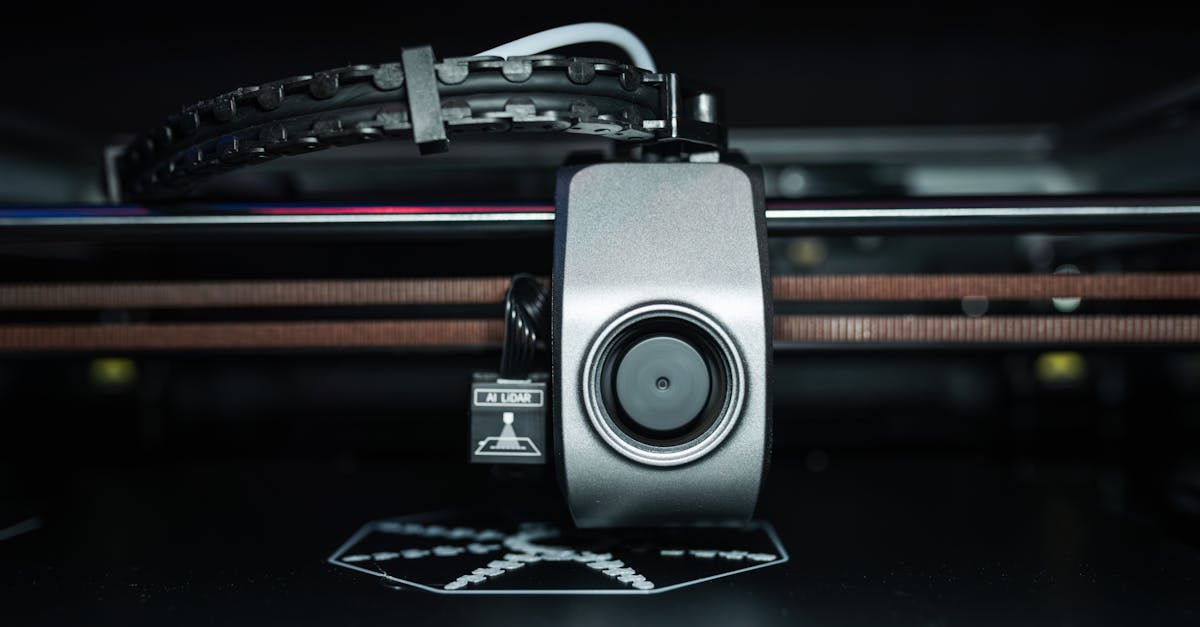
Photo by Matheus Bertelli on Pexels
A 3D Printed iPhone is Possible: Apple's Aluminum Challenge and the Future of Device Manufacturing
Meta Description: Explore the potential for a 3D printed iPhone. This post examines the technological hurdles, focusing on aluminum fabrication, and discusses the implications for US manufacturing and consumer product design.
Keywords: 3D printed iPhone, Apple manufacturing, aluminum 3D printing, additive manufacturing, US tech industry, consumer electronics, device design, future technology
The concept of a 3D printed iPhone, while currently facing significant manufacturing obstacles, is becoming increasingly feasible. A primary challenge lies in the efficient and cost-effective 3D printing of aluminum, a material extensively used by Apple in its current iPhone designs. Overcoming these limitations could unlock new possibilities in device customization, streamlined production, and potentially reshape aspects of the US technology manufacturing landscape.
This analysis delves into the technical requirements and potential benefits of additive manufacturing for consumer electronics, particularly for a product as iconic as the iPhone.
- Overview: The Allure of a 3D Printed iPhone
- Background: Current iPhone Manufacturing
- The Aluminum Hurdle: 3D Printing Challenges
- Advancements in Additive Manufacturing
- Expert Analysis: Implications for US Tech
- Design and Customization Possibilities
- What's Next for 3D Printing in Electronics?
- Frequently Asked Questions
- Conclusion
Overview: The Allure of a 3D Printed iPhone
Imagine a future where smartphones are not just assembled but additively manufactured, layer by layer, from raw materials. The possibility of a 3D printed iPhone represents a significant leap in consumer electronics production. While the iconic device is currently built through complex assembly processes, the advent of advanced 3D printing, or additive manufacturing, suggests a potential paradigm shift. This innovation promises greater design freedom, potentially faster prototyping, and a reevaluation of how complex electronic devices are brought to market, with significant implications for the US technology sector.
Background: Current iPhone Manufacturing
For years, iPhones have been characterized by their sleek, precisely engineered aluminum unibodies and components. The current manufacturing process involves intricate machining, stamping, and assembly of various parts, primarily sourced and produced in large-scale factories. This established method allows for mass production and high quality control. However, it also involves significant material waste and a relatively fixed design architecture that is difficult to alter without extensive retooling. The move towards a 3D printed iPhone would necessitate a fundamental reimagining of this entire supply chain and production philosophy.
The Aluminum Hurdle: 3D Printing Challenges
The core of the challenge in realizing a 3D printed iPhone lies in the effective and efficient 3D printing of aluminum. While 3D printing technologies for metals have been around for decades, scaling them for mass-produced consumer electronics presents unique difficulties:
- Speed and Volume: Current metal 3D printing processes are often slow compared to traditional manufacturing methods. Producing millions of iPhones annually would require printing speeds orders of magnitude faster than what is currently widely available.
- Material Properties: Achieving the precise strength, durability, and aesthetic finish of machined aluminum through 3D printing can be demanding. Factors like grain structure, porosity, and internal stresses need careful control to match existing standards.
- Cost-Effectiveness: The cost per part for 3D printed aluminum components needs to become competitive with established mass-production techniques. This includes the cost of specialized printers, metal powders or filaments, and post-processing.
- Complexity of Components: An iPhone contains a multitude of intricate parts. Successfully printing an entire chassis, or even a significant portion of it, with embedded features requires highly advanced printing capabilities.
The materials science behind 3D printing is rapidly advancing. Industry speculation suggests that breakthroughs in binder jetting, selective laser melting (SLM), and electron beam melting (EBM) could eventually make high-volume aluminum printing viable for consumer goods. However, the leap from niche industrial applications to iPhone-level production is substantial.
Advancements in Additive Manufacturing
Despite the hurdles, additive manufacturing is continuously evolving. Innovations in several areas are making metal 3D printing more practical:
- New Printing Technologies: Developments in multi-material printing and faster deposition methods are emerging.
- Advanced Alloys: Researchers are developing aluminum alloys specifically optimized for 3D printing, offering improved mechanical properties and printability.
- Software and AI Integration: Sophisticated software is crucial for design optimization, print path planning, and real-time process monitoring, which can significantly improve speed and quality. Artificial intelligence is also being explored to predict and mitigate printing defects.
- Post-Processing Innovations: Streamlining post-printing steps like heat treatment and surface finishing is essential for reducing overall production time and cost.
Expert Analysis: Implications for US Tech
If Apple, or any major electronics manufacturer, successfully transitions to 3D printing for core components like an iPhone chassis, the implications for the US technology industry could be profound. Firstly, it could spur a renaissance in domestic manufacturing. Additive manufacturing often requires highly skilled labor for operation, maintenance, and design, potentially creating new high-tech jobs within the United States. This contrasts with the current labor-intensive assembly often outsourced overseas. Secondly, it could lead to more agile product development cycles. Instead of lengthy retooling periods, design iterations could be tested and implemented more rapidly. Finally, it might foster a more localized supply chain, reducing reliance on distant manufacturing hubs and enhancing resilience.
Design and Customization Possibilities
A 3D printed iPhone opens up exciting avenues for design and personalization. Additive manufacturing excels at creating complex geometries that are impossible or prohibitively expensive with subtractive methods. This could lead to:
- Integrated Features: Internal structures for antennas, cooling systems, or even speaker enclosures could be printed directly into the chassis, optimizing space and performance.
- Unique Ergonomics: Devices could be designed with more nuanced curves and grips tailored to human hands, enhancing comfort.
- Mass Customization: In the long term, it's conceivable that users could order iPhones with personalized dimensions, finishes, or even integrated functional elements, marking a significant departure from the current one-size-fits-all approach.
What's Next for 3D Printing in Electronics?
While a fully 3D printed iPhone may still be several years away, the journey has already begun. It is more likely that specific, complex components will be the first to adopt additive manufacturing. Early reports suggest that companies are exploring 3D printing for intricate internal parts or for rapid prototyping of new designs. Industry speculation points towards a gradual integration, perhaps starting with specialized components or limited-edition models before any full-scale adoption. The continued advancements in materials, printer technology, and software will dictate the pace of this transformation.
Frequently Asked Questions
Is it possible to 3D print an entire iPhone today?
No, not at a mass-production scale and cost comparable to current methods. While individual components or prototypes can be 3D printed, the entire device is not yet manufacturable this way for the consumer market.
What are the main challenges with 3D printing aluminum for phones?
The primary challenges are printing speed, cost-effectiveness, achieving desired material properties, and the complexity of the required components for mass production.
How could 3D printing benefit US manufacturing?
It could lead to reshoring of manufacturing, creation of high-skilled jobs, and a more agile, localized supply chain for electronics.
When might we see 3D printed components in consumer electronics?
Early reports indicate a gradual integration, possibly starting with specialized or high-end components within the next few years.
Could 3D printing lead to personalized iPhones?
Potentially, yes. In the long term, additive manufacturing could enable mass customization of device design and features.
Conclusion
The vision of a 3D printed iPhone is more than just science fiction; it's a tangible future contingent on overcoming significant material and manufacturing challenges, particularly with aluminum. As additive manufacturing technologies mature, the possibility grows stronger. For the US tech industry, this evolution holds the promise of renewed domestic production capabilities, innovative product designs, and a fundamentally different approach to creating the devices that define our digital lives. Keeping an eye on advancements in metal 3D printing will be key to understanding the future of consumer electronics.
Post a Comment