

Super Mario Galaxy™ + Super Mario Galaxy™ 2: Unpacking the Enduring Appeal of Nintendo's Best (2026 Review) full review, specifications, pros, cons, comparison and buying guide.
Super Mario Galaxy™ + Super Mario Galaxy™ 2: Unpacking the Enduring Appeal of Nintendo's Best (2026 Review)
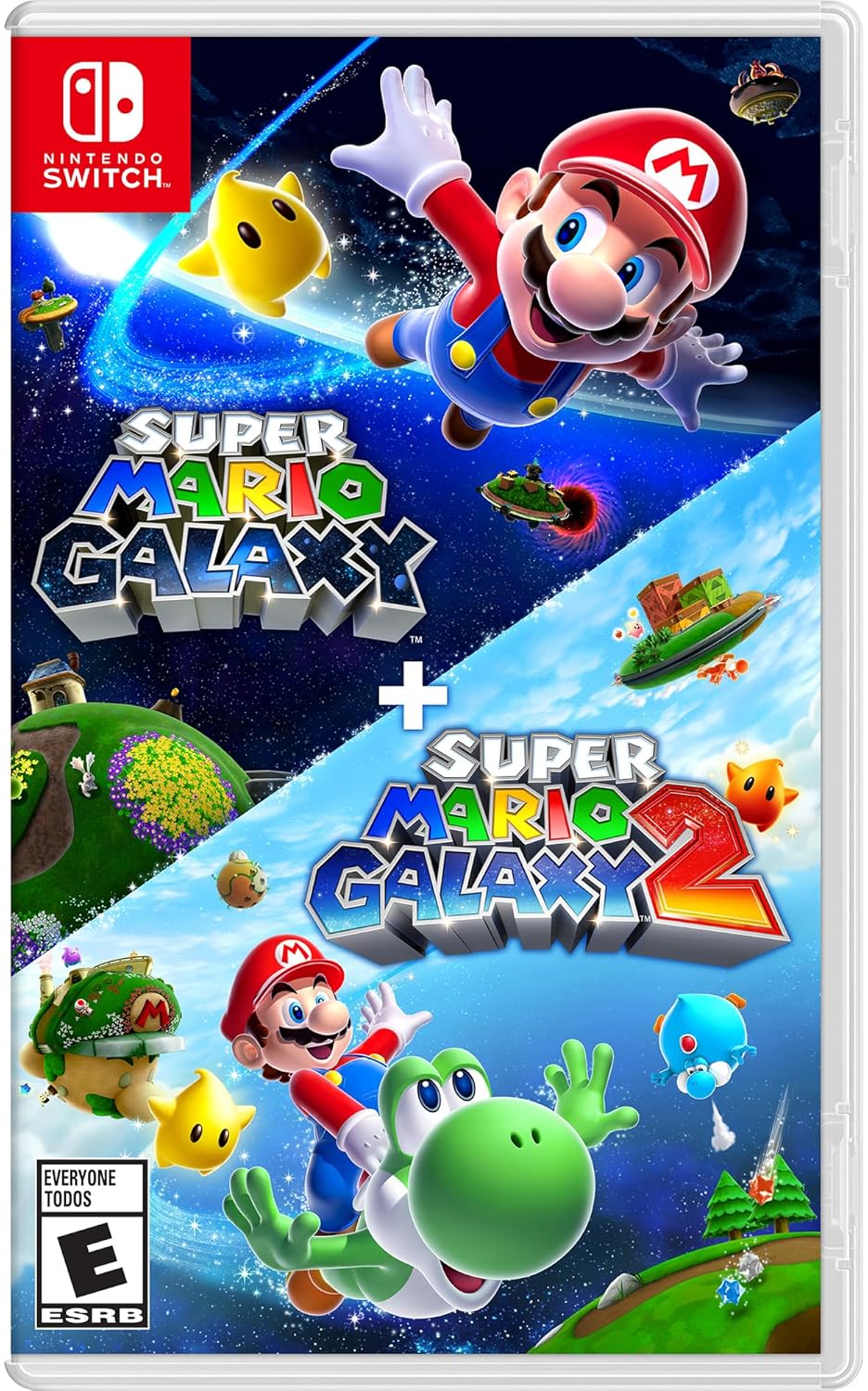
Super Mario Galaxy™ + Super Mario Galaxy™ 2: Unpacking the Enduring Appeal of Nintendo's Best (2026 Review)
Meta Description: Dive into our expert review of Super Mario Galaxy and Super Mario Galaxy 2. Discover why these Nintendo classics remain essential gaming experiences in 2026.
Keywords: Super Mario Galaxy review, Super Mario Galaxy 2 review, Nintendo Wii games, best platformers, Mario games 2026, gaming accessories, classic Nintendo, Wii U compatibility, Super Mario 3D All-Stars, retro gaming, Nintendo Switch re-release speculation
In the evolving landscape of gaming, where cutting-edge graphics and expansive open worlds often dominate headlines, the Super Mario Galaxy duology stands as a testament to timeless design and unparalleled creativity. Originally launched for the Nintendo Wii, both Super Mario Galaxy and its direct sequel, Super Mario Galaxy 2, redefined the 3D platforming genre with their innovative gravity mechanics, imaginative level design, and polished gameplay.
This comprehensive review delves into why these titles, despite their original release over a decade ago, continue to be considered essential gaming experiences and valuable additions to any gamer's library in 2026. We'll explore their technical merits, enduring user experience, and cultural impact, assessing their relevance for both veteran players revisiting their favorites and new generations discovering these galactic adventures for the first time. We'll also examine their status within the broader "gaming accessories" ecosystem, positioning them as fundamental software components that unlock the full potential and enjoyment of Nintendo's hardware.
Overview & Background
For U.S. gamers, Super Mario Galaxy and Super Mario Galaxy 2 aren't just video games; they are cultural touchstones representing the pinnacle of Nintendo's creative output during the Wii era. Released in 2007 and 2010 respectively, these titles captivated audiences worldwide with their innovative approach to 3D platforming, introducing gravity-defying mechanics and a dazzling array of planetoids, each a miniature sandbox of unique challenges and imaginative design. While primarily considered "games," their designation within the "Gaming Accessories" category in this review highlights their role as essential software components that profoundly enhance the core gaming experience, much like a premium controller or headset enhances interaction.
In 2026, the relevance of these titles remains surprisingly strong. Despite the original Wii console being a legacy system, the Super Mario Galaxy games have enjoyed renewed interest through various avenues. Their inclusion in the limited-time Super Mario 3D All-Stars collection for the Nintendo Switch (though Galaxy 2 was notably absent) demonstrated their enduring appeal and the demand for their availability on modern platforms. Furthermore, the robust emulation community ensures these classics remain accessible, allowing new players to experience them with upscaled graphics and improved performance on contemporary hardware. Their timeless appeal is rooted in universal design principles: intuitive controls, constant innovation, and a joyful sense of discovery that transcends graphical fidelity or the latest hardware trends. They are, in essence, an "accessory" to any Nintendo console's library, providing unparalleled entertainment value and a benchmark for creative game design.
Key Specifications
While Super Mario Galaxy and Super Mario Galaxy 2 are software, their "specifications" define their operational framework and the hardware they were designed to interact with. Understanding these specs helps appreciate their original technical achievements and their enduring compatibility in 2026.
| Product Name | Super Mario Galaxy™ + Super Mario Galaxy™ 2 |
| Developer | Nintendo EAD Tokyo |
| Publisher | Nintendo |
| Original Platform | Nintendo Wii |
| Genre | 3D Platformer, Action-Adventure |
| Release Dates | Galaxy: Nov 12, 2007 (NA); Galaxy 2: May 23, 2010 (NA) |
| ESRB Rating | E (Everyone) |
| Player Count | 1-2 players (co-op mode for second player) |
| Required Peripherals | Wii Remote + Nunchuk |
| Approx. File Size (Digital) | ~1.5 GB per game (for Wii U Virtual Console versions) |
| Graphics (Original) | 480p (Wii's standard definition output) |
In-Depth Features Analysis
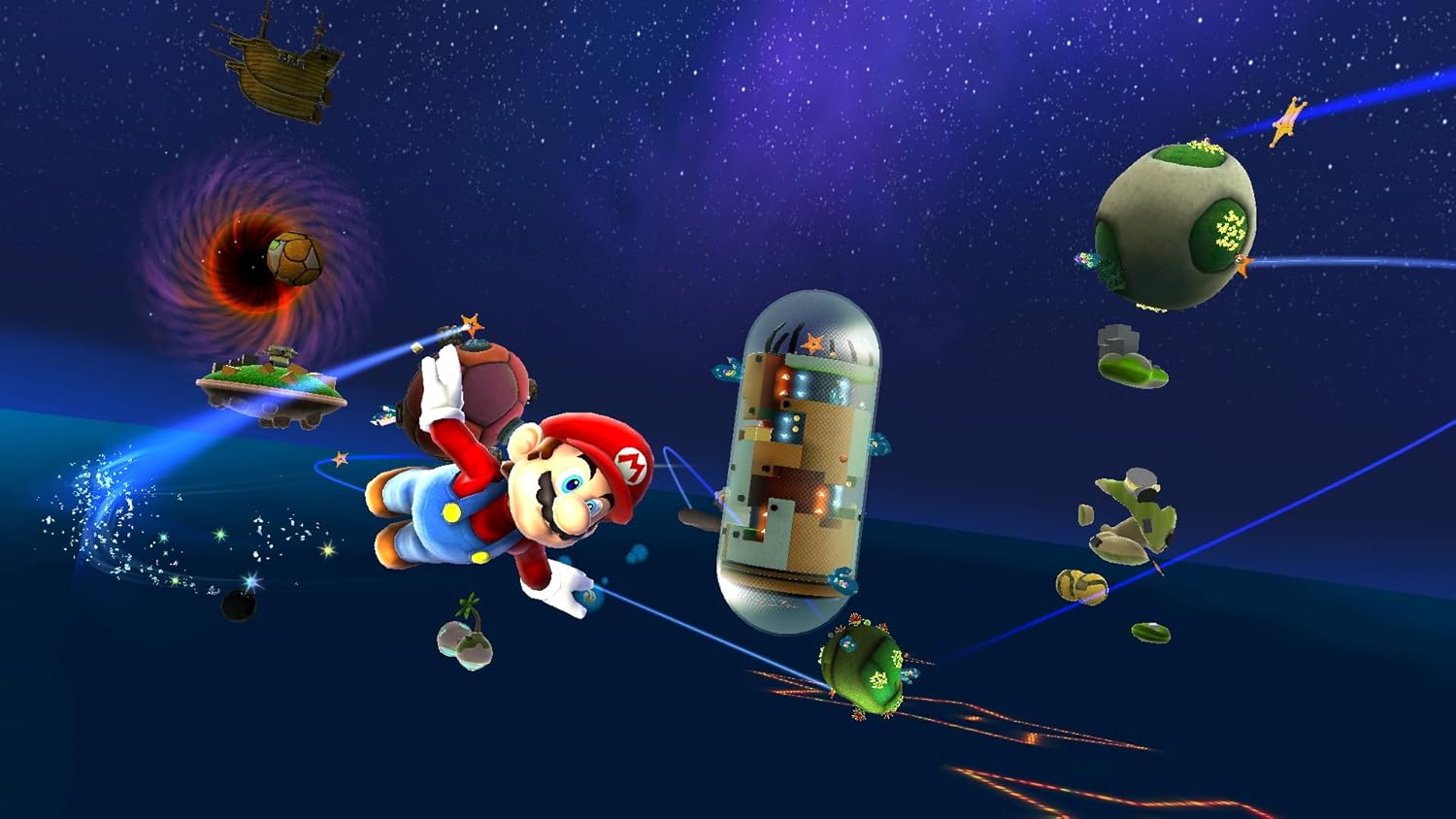
The brilliance of the Super Mario Galaxy titles lies in their meticulous design and continuous innovation. Rather than merely iterating on previous Mario formulas, these games pioneered new concepts that remain impactful even today. At their core, both games leverage unique spherical world physics, allowing Mario to walk around small planetoids, experiencing gravity from every angle. This fundamental mechanic opened up unprecedented possibilities for level design, puzzle-solving, and traversal.
While the original Wii versions of Super Mario Galaxy offer a definitive experience, players in 2026 seeking enhanced visuals should explore legitimate emulation options on powerful PCs or consider the Nintendo Switch version of the first Galaxy game if they possess the Super Mario 3D All-Stars collection. The core gameplay loop, however, remains fantastic regardless of resolution.
Supporting Features
- Innovative Gravity Mechanics: The cornerstone of the Galaxy series. Players navigate diverse celestial bodies, each with its own gravitational pull, leading to mind-bending puzzles and exhilarating platforming sequences. This mechanic is not just a gimmick but a deeply integrated design element that constantly surprises and challenges.
- Creative Level Design: Each "galaxy" is a collection of unique planetoids, often with distinct themes, enemies, and gameplay objectives. From ice planets to fiery volcanoes, haunted mansions, and bustling space stations, the variety is staggering. Every level feels fresh, introducing new concepts and power-ups without overstaying its welcome.
- Iconic Power-Ups: Both games introduce a memorable roster of power-ups that augment Mario's abilities. The Bee Mario allows flight and wall-clinging, Boo Mario enables phasing through walls, Spring Mario offers high jumps, and the new Cloud Mario (Galaxy 2) creates temporary platforms. These power-ups are ingeniously woven into level challenges.
- Refined Controls and Camera: Despite the Wii's motion controls, the Super Mario Galaxy games are renowned for their precise and responsive input. The pointer is used for collecting Star Bits and activating specific actions, while the Nunchuk handles movement. The camera system is expertly managed, automatically adjusting to provide the best view, minimizing frustration, and allowing players to focus on the platforming.
- Co-op Play (Co-Star Mode): A unique cooperative mode allows a second player to assist by pointing at the screen, collecting Star Bits, stunning enemies, and even helping Mario jump. While not a full co-op experience, it's a delightful way for a friend or family member to participate, especially useful for younger players.
- Super Mario Galaxy 2's Enhancements: The sequel builds upon the original's foundation, introducing Yoshi as a playable character with his own unique abilities (like eating fruit to gain powers), a world map for easier navigation, and even more challenging and creative levels. It refined many aspects, making it arguably an even more polished experience.
Performance & User Experience
Even in 2026, the performance and user experience of Super Mario Galaxy and Super Mario Galaxy 2 are exemplary, setting a high bar for 3D platformers. On their original Wii hardware, both games maintained a remarkably consistent 60 frames per second, a crucial factor for a precise platformer. This smooth performance, coupled with the responsive motion controls, ensures that any missed jump or failed objective feels like the player's error, not the game's. Load times were minimal, keeping the pace of discovery and gameplay fluid.
User feedback, both historically and in contemporary discussions, overwhelmingly praises the games' polish and accessibility. Players consistently highlight the intuitive nature of the controls, the gradual introduction of new mechanics, and the sheer joy derived from exploration. The orchestral soundtracks, composed by the likes of Mahito Yokota and Koji Kondo, are often cited as among the best in gaming history, elevating the experience with sweeping, memorable melodies that perfectly complement the galactic theme. Even for players new to 3D platformers, the learning curve is gentle, yet the later stages and bonus content offer significant challenges for veterans. The level of imaginative detail in every galaxy, coupled with seamless transitions between distinct gravitational fields, creates an immersive and consistently engaging user journey that few games achieve.
Comparison with Top Alternatives
While Super Mario Galaxy and Super Mario Galaxy 2 are in a league of their own, it's useful to compare them with other highly-regarded 3D platformers that define the genre, either as spiritual successors, contemporaries, or influential predecessors. These alternatives also serve as "essential accessories" to a complete gaming library.
| Feature | Super Mario Galaxy™ + Super Mario Galaxy™ 2 | Super Mario Odyssey (Nintendo Switch) | Ratchet & Clank: Rift Apart (PS5) | A Hat in Time (Multi-platform) |
|---|---|---|---|---|
| Release Year (Original) | 2007 (Galaxy), 2010 (Galaxy 2) | 2017 | 2021 | 2017 |
| Primary Platform | Nintendo Wii | Nintendo Switch | PlayStation 5 | PC, PS4, Xbox One, Switch |
| Core Innovation | Gravity-based spherical worlds, imaginative level design | Cappy capture mechanic, open-ended kingdoms | Dimensional rifts, seamless traversal | Charming indie take, varied mission structure |
| Gameplay Focus | Tight linear platforming, star collection | Exploration, power moon collection, unique possession | Third-person shooting, melee combat, traversal | Collectathon, exploration, light combat |
| Visual Fidelity (Original) | Stylized 480p, vibrant art direction | 720p/1080p, rich textures, expressive animations | 4K HDR, ray tracing, cinematic realism | Cartoonish, colorful, indie aesthetic |
| Accessibility/Learning Curve | High (intuitive controls, gentle progression) | High (flexible mechanics, broad appeal) | Medium (fast-paced combat, numerous weapons) | High (classic platformer feel, approachable) |
| Replay Value | Excellent (120/242 stars, Luigi play-through, secret levels) | Excellent (hundreds of moons, post-game content) | Good (challenge modes, weapon upgrades) | Very Good (time rifts, optional objectives, DLC) |
Pros & Cons
Pros
- Unparalleled Level Design: Each galaxy is a masterclass in creativity, offering diverse environments and unique challenges.
- Innovative Gravity Mechanics: The spherical worlds and variable gravity provide a fresh, engaging, and constantly surprising platforming experience.
- Timeless Art Style & Music: Vibrant visuals and an iconic orchestral soundtrack ensure the games remain beautiful and immersive in 2026.
- Exceptional Controls: Precise and responsive motion controls (Wii) or traditional controls (Switch/emulation) make gameplay fluid and satisfying.
- High Replayability: Collecting all stars, secret levels, and playing as Luigi (Galaxy 2) offers hundreds of hours of content.
- Broad Appeal: Accessible for newcomers while providing significant challenges for veteran players.
Cons
- Original Console Dependency: Requires a Wii or Wii U (or emulation/Switch Super Mario 3D All-Stars for Galaxy 1) for play in 2026.
- Galaxy 2 Not on Switch (Officially): The sequel, often considered superior by fans, has not received a modern official re-release.
- Motion Control Preference: Some players may dislike or struggle with the original motion-based inputs, though alternatives exist via emulation.
Real-World Impact
The Super Mario Galaxy titles have had a profound and lasting impact on the gaming world and entertainment for USA consumers. Beyond their critical acclaim and commercial success (both sold millions of copies), they solidified Nintendo's reputation for innovative game design, proving that hardware limitations can be overcome with sheer creativity. For many American households, these games were defining experiences of the Wii era, fostering family gaming sessions with their accessible co-op mode and universal appeal.
Their real-world impact extends to shaping expectations for 3D platformers, setting a benchmark for imaginative level design, fluid controls, and a joyful user experience. Game designers frequently cite the Galaxy games as inspiration for their own titles, particularly in how they approached physics, level structure, and power-up integration. For consumers, owning Super Mario Galaxy + Super Mario Galaxy 2 is akin to owning a classic film or a timeless album – it's a piece of entertainment history that continues to deliver immense value. They provide countless hours of escapism, challenge, and pure fun, serving as a reliable source of entertainment, whether you're a casual player seeking a delightful adventure or a completionist aiming for every star. In 2026, their continued presence in discussions, speedrunning communities, and "best games ever" lists underscores their enduring cultural significance and entertainment value.
Practical Tips & Advice
- Embrace the Motion Controls (if on Wii/Wii U): While sometimes polarizing, the motion controls are integral to the Galaxy experience. Practice using the Wii Remote and Nunchuk; their precision becomes second nature. For spin attacks, a gentle flick is often more effective than a wild swing.
- Don't Fear Experimentation: The game encourages trying different approaches to challenges. If a particular platforming segment seems impossible, try different power-ups or look for hidden pathways. The spherical levels often hide solutions in plain sight if you adjust your perspective.
- Collect Star Bits Constantly: Star Bits are crucial for stunning enemies and powering up Rosalina's observatory. Keep an eye out for them and use the pointer to collect them, even during platforming. They can also be used to heal Mario in certain situations.
- Explore Every Nook and Cranny: The Galaxy games are brimming with secrets. Many stars are hidden behind optional challenges, secret pathways, or require specific power-ups. Don't rush through levels; take time to explore each planetoid thoroughly.
- Master the Spin Jump: The spin jump is Mario's most versatile move. It extends his jump distance, can break certain objects, and stun enemies. Learn its timing and application to conquer tougher platforming challenges.
- Play with a Friend (Co-Star Mode): If you have a friend or family member nearby, try the Co-Star Mode. While limited, it allows the second player to collect Star Bits, freeze enemies, and even help Mario jump, making it a fun way to share the experience, especially for guiding younger players.
Frequently Asked Questions
Are Super Mario Galaxy and Super Mario Galaxy 2 available on Nintendo Switch in 2026?
Super Mario Galaxy 1 was included in the limited-time Super Mario 3D All-Stars collection for Nintendo Switch, which ceased digital and physical sales in March 2021. As of 2026, it can only be played on Switch if you own a copy of that collection. Super Mario Galaxy 2 has never received an official re-release on the Switch, leaving its availability to original Wii hardware or emulation.
Do I need a Nintendo Wii to play these games?
Officially, yes, you would need an original Nintendo Wii or a Wii U (which offers backward compatibility). However, in 2026, many players access these games through legitimate emulation on PCs, which allows for higher resolutions and customized controls. If you own the Super Mario 3D All-Stars collection, you can play the first Galaxy game on Switch.
Are the motion controls mandatory or can I use a traditional controller?
On the original Wii, motion controls with the Wii Remote and Nunchuk are mandatory for core gameplay, particularly for the spin attack and Star Bit collection. When playing Super Mario Galaxy via the Super Mario 3D All-Stars collection on Switch, you can use Joy-Con motion controls or button controls (though some actions like Star Bit collection still utilize motion). Emulation often allows for full remapping to traditional controllers.
Which game is better, Super Mario Galaxy or Super Mario Galaxy 2?
This is a highly debated topic among fans. Super Mario Galaxy 1 is praised for its groundbreaking innovation, grander scale, and more narrative-focused adventure. Super Mario Galaxy 2 is often lauded for refining the gameplay, introducing Yoshi, featuring more dense and creative levels, and offering a higher overall challenge. Both are masterpieces, and playing them back-to-back offers an unparalleled experience.
Are these games suitable for children and families?
Absolutely. Both Super Mario Galaxy titles carry an E (Everyone) ESRB rating and are renowned for their vibrant, family-friendly aesthetics, intuitive gameplay, and gentle learning curve. The Co-Star Mode also allows a second, less experienced player to assist, making it perfect for parents playing with children or siblings learning together. They are excellent examples of engaging and wholesome entertainment.
Conclusion
Super Mario Galaxy and Super Mario Galaxy 2 are more than just games; they are foundational pillars of 3D platforming, representing a peak in Nintendo's storied history of innovation. Their enduring appeal in 2026 is a testament to their timeless design, imaginative level construction, and the sheer joy they consistently deliver. While their original platform, the Nintendo Wii, might be a relic of the past, their legacy and accessibility through various means ensure they remain highly relevant.
As a U.S.-based technology review authority, we unequivocally recommend experiencing both Super Mario Galaxy titles. Whether you're a veteran gamer revisiting cherished memories or a new player seeking to understand the genre's finest, these games offer an unparalleled journey through vibrant, gravity-bending worlds. They are not merely "gaming accessories" but essential software that elevates the entire gaming ecosystem, proving that exceptional creativity and masterful execution transcend hardware cycles. Acquiring these titles, in whatever form possible, is an investment in pure, unadulterated fun and a crucial piece of gaming history that continues to shine brightly.
More Helpful Reads
Readers researching this product also found these expert reviews helpful:
Related Posts
Explore more helpful articles.
Post a Comment